
Wireless / WiFi
The wireless networking market is growing rapidly as businesses discover the productivity benefits of going wire-free. The increased mobility that WiFi networks offer has proved beneficial in operations throughout manufacturing warehouses, hotels, airports, hospitals, colleges, corporations and convention centers.
Overview

Wireless Network Solutions For Your Business
Systel offers full-service wireless (WiFi) network implementations across the Southeastern United States including Georgia, Florida, Alabama, Tennessee, South Carolina, and North Carolina. We can customize, design, plan, and install your network for virtually any venue from start to finish.
As WiFi networks have become common in industrial, commercial, educational, and retail environments, we have installed wireless networks in environments such as: schools and universities, coffee shops, warehouses, hotels, airports, and business offices. In addition, Systel has created integrated connectivity in business complexes and school campuses.
Systel can design and install a WiFi network for virtually any venue.
- Enterprise Wireless Hotspots
- Outdoor Broadband Wireless
- Point to Point Wireless
- Fixed Wireless Access
- Wireless VOIP
- Multi-Service Mesh Networks
- Wireless Signal Enhancement
- Wireless Video Surveillance
- 802.11a
- 802.11b
- 802.11g
- 802.11n
- Staging & Configuration
- Installation
- Integration
- Validation
- Optimization
- Enterprise/Corporate Office
- Industrial & Manufacturing
- Warehouses
- Retail
- Restaurants
- Education & Campus
- Hotels & Motels
- Healthcare
- Financial Services
- Government & Municipalities
Installation
Systel is your #1 source for wireless network design and installation services. Our customers benefit in a variety of ways, including eliminating unnecessary capital expenditures, minimizing help desk calls from unsatisfied users, and maximizing performance of critical applications.
The invisibility and the uncertainty of RF propagation can make wireless LAN performance and network planning complex tasks. Whether investing in a new 802.11n WLAN network, migrating from a legacy 802.11 a/b/g WLAN network, or using a mixed environment, proper planning keeps sensitive data secure and critical applications running at peak performance level.

Our wireless installation and mounting activities include:
– A physical site assessment to confirm suitability of each intended mounting location
– Confirmation of suitable AC power capacity and availability
– Installation of required structured Ethernet cable (both indoor and outdoor installation)
– Specialty feature design and installation including:
– Trenching, Overhead aerial cables, Tower or pole erection
– Mounting of all access points and antennas including required antenna cable runs and antenna grounding
– Installation of appropriately weather-rated or fire-rated wireless network equipment enclosures
– Interconnection of the WiFi system to the existing IP network infrastructure
– Equipment tune-up and on-site configuration
– Post-installation coverage and connectivity verification
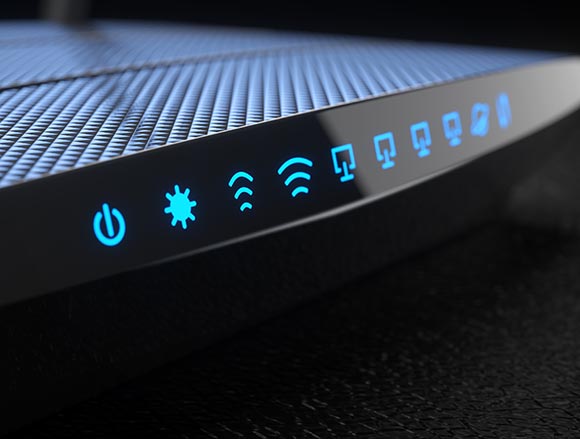
Commercial Wireless Installations
-Indoor Wireless Installations
-Outdoor Wireless Installations
-Point to Point Wireless
-Point to Multi Point Wireless
-Wireless Mesh Network
Pre-Install Services
Conducting a wireless survey is essential to correctly implementing a WiFi network with 99.999% availability and will save both time and money in the long run.
We use the latest industry tools and techniques to map out wireless radio frequency coverage for the intended area and then provide clients with complete documentation on all aspects of the survey. Only after a professionally conducted wireless survey will customers be equipped to create a fully scalable and secure wireless network.

Wireless site surveys include the following:
-Detection, measuring, and recording of the presence of RF Interference that could degrade the performance of a wireless network
-Calculation of the WiFi supported data rates that can be expected throughout the premises
-Access point locations
-Wireless bridge locations
-Antennas and other wireless equipment
-Co-location of WiFi access points with channel selection and reuse
-Information such as: antenna selection, orientation and polarization
-Look for signs of, reflection, refraction, multipath, hidden nodes, dead spots, etc.

Wireless site survey documentation includes:
-Detailed information on the data gathered from the survey
-Photographs at the location of all wireless equipment
-Maps of the WiFi RF coverage
-Details of RF interference
-WiFi Equipment list

Spectrum Analysis / RF Interference
A full spectrum analysis will include detection, measuring, and recording of the presence of RF Interference that could degrade the performance of a wireless network. Interference such as microwaves, PIR sensors, Bluetooth, and legacy wireless devices can have a profound impact on a wireless network.
-WiSpy Channels
-RF Interference
-Measurement of SNR
-RF power peaks
-WiFi Channel interference
-WiFi Channel Overlap
Health Check for Existing Networks
Is your wireless network underperforming? Do you have interference, dropouts, poor throughput, or connection issues? Do you want peace of mind and reassurance that your wireless network is operating optimally? Our WiFi Health Check Survey is an invaluable tool when diagnosing problematic wireless networks.

Performing a wireless survey on an existing wireless network is a great way to baseline your wireless performance.
– Poor Performance / Throughput
– RF Interference
– Find WiFi Rogue Access Points
– Locate Dead Spots
– WiFi Security Weaknesses
– WiFi Client Connection Problems
The Health Check Survey documentation will include:
– Maps of the WiFi RF coverage
– Detection, measurement and recording of the presence of RF Interference that could degrade the performance of a wireless network
– Diagnostics of common WiFi problems – Hidden Node, Near Far, Sticky Client, etc.
– Recommendations for fault resolution

Poor Performance and Throughput
Are your WiFi clients experiencing poor performance on your wireless network? There may be a serious problem causing low throughput that is starting to have an impact on your business.
Spectrum Analysis / RF Interference
A full spectrum analysis will include detection, measuring, and recording of the presence of RF Interference that could degrade the performance of a wireless network. Interference such as microwaves, PIR sensors, Bluetooth, and legacy wireless devices can have a profound impact on a wireless network.

Find Rogue Access Points
WiFi Rogue access points are a serious threat to the security of your wireless network and corporate data. A WiFi rogue access point is usually installed by someone who is looking for the same convenience and flexibility at work that they have grown accustomed to using on his/her home wireless network. This occurs when full wireless coverage throughout the building is nonexistent.
Locate Wireless Dead Spots
Dead spots in your wireless network can sometimes be hard to find; they can be the result of a poorly designed WiFi network or a change in the RF environment. Allowing us to help you design more redundancy into your network design, our wireless health check will map out all of the coverage holes in your WiFi network.

Security Weaknesses
WiFi security is presently at the top of everyone’s agenda; that should be no different for your wireless network. WEP and WPA are no longer acceptable in a corporate environment; our wireless survey will highlight your security weaknesses allowing us to give you the right recommendations to secure your data!
The Health Check Survey documentation will include:
-Maps of the WiFi RF coverage
-Detection, measurement and recording of the presence of RF Interference that could degrade the performance of a wireless network
-Diagnostics of common WiFi problems – Hidden Node, Near Far, Sticky Client etc.
-Recommendations for fault resolution
How Can We Help?
We’re here to answer your questions. Please use the link below to request service or a quote, get support, or just send us a message.